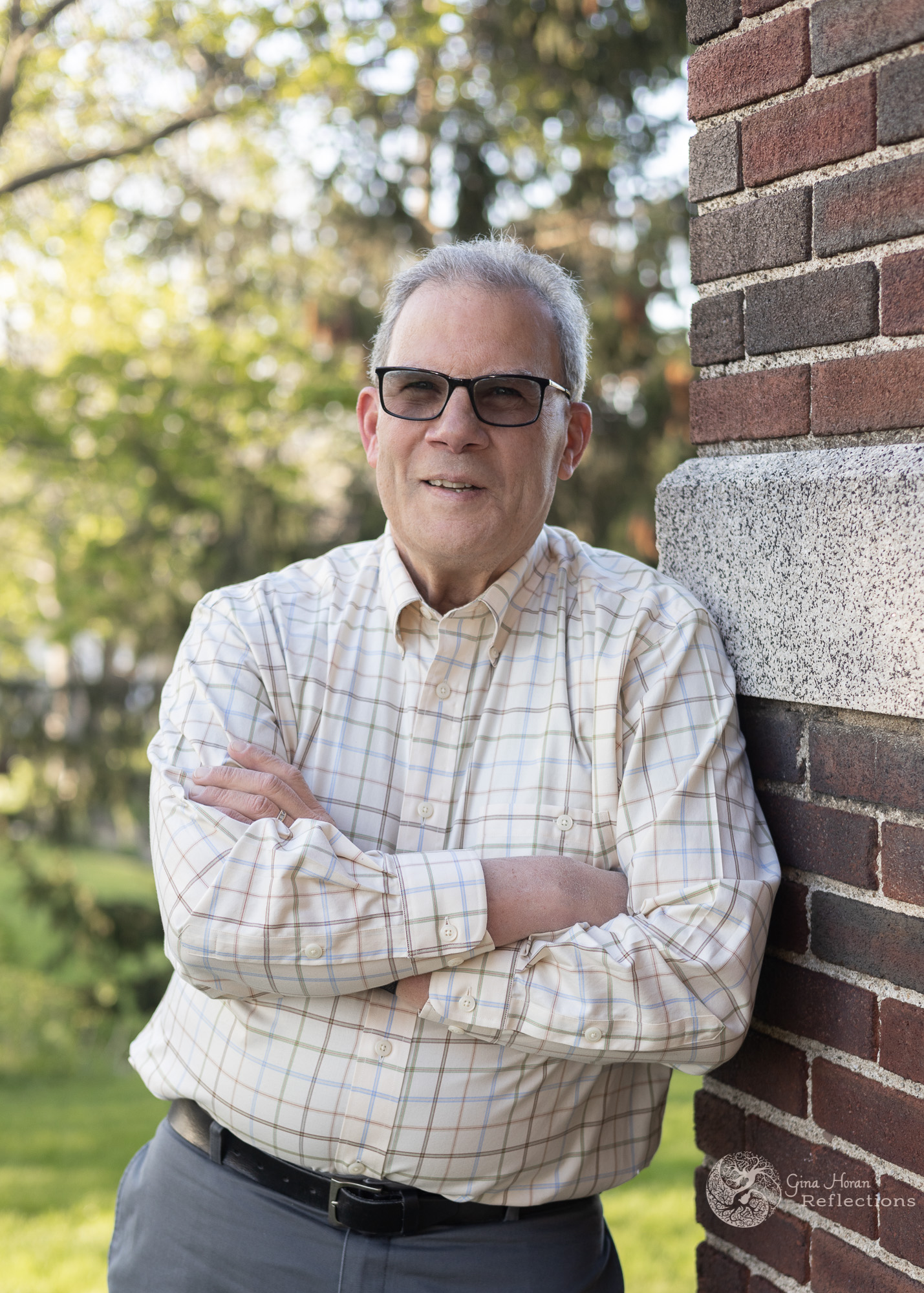
About Jerry Elman
I grew up with history before I understood what it had done to us.
The work began much later, when I started asking what history leaves behind—and what people can recognize before change becomes history.
Where it began
History was never abstract to me.
I am the son of two Holocaust survivors from Poland. I grew up knowing that something enormous had happened to my family, but much of it lived in silence. There were missing people, missing photographs, fragments of stories, and emotions I felt long before I understood where they came from.
That shaped the way I came to see history. Not simply as dates and events, but as something that continues inside families, institutions and ordinary human behavior long after the event itself is over.
What happens to people while the world around them is changing?
A life outside books
The question followed me into every part of my life.
Long before I became a writer, I spent 26 years at Eastman Kodak Company as an engineer and technical manager. Later, I owned and operated an automotive business in the Rochester, New York area. I also spent decades working with nonprofit and community organizations in roles ranging from board member and officer to president and organizational leader.
Those experiences gave me a systems view of change. I watched how organizations behave under pressure, how cultures harden, how incentives change decisions, how people adapt to environments they did not create, and how something that once seemed unthinkable can become ordinary when it happens slowly enough.
That perspective eventually became inseparable from the historical questions I had carried since childhood.
Why I began writing
First I tried to understand my parents. Then I began to understand myself.
Miracles Through Hell, published in 2022, began as an effort to document my parents’ Holocaust survival stories. Researching and writing it opened something I had not expected. I was not only reconstructing their past. I was beginning to understand the silence, inherited fear and emotional patterns that had shaped my own life as a second-generation survivor.
That work led to a broader question. If people can carry the effects of history without fully recognizing them, can societies do something similar? Can fear, division, economic pressure, emotional exhaustion and changing norms reshape us gradually enough that we adapt before we realize what has happened?
That question became Echoes of History: The Patterns We Refuse to See.
The work now
I am less interested in telling people what to think than in creating room to notice.
My writing and presentations explore historical memory, inherited trauma, hatred toward Jews, normalization, social pressure, the loss of shared reality, and the ways people change while living through sustained cultural and emotional strain.
The goal is not to force the present into the shape of the past. History does not repeat in identical events. What returns are recognizable patterns of human behavior.
That is also the purpose of The Destination We Are Choosing, a guided community conversation built around a more personal question: What changed in me? It asks people to step outside the argument long enough to recognize what pressure, fear and division may have changed in all of us—and what we still have the ability to choose.
The purpose of looking backward is not to live there. It is to recognize direction while we still have choices.
In brief
Writer. Speaker. Public educator.
Jerry M. Elman is an American author, speaker and public educator whose work explores historical memory, human behavior, inherited trauma and the gradual changes people learn to accept as normal.
He is the author of Miracles Through Hell and Echoes of History: The Patterns We Refuse to See. He speaks with libraries, faith communities, civic organizations, schools, book groups and other community audiences, using a conversational and reflective format rather than a traditional lecture.
He lives in the Finger Lakes region of New York and continues to write essays on Substack.