Books
Two books. One question that kept widening.
I began by trying to understand what happened to my parents. The search eventually became a larger question about what history asks of the people living after it.
The beginning
Before there were patterns, there were people whose stories I did not know.
My parents survived the Holocaust, built a life in America, and—as so many survivors did—said very little about what they had endured. I grew up knowing that something enormous stood behind our family, but without the stories that would explain it.
Writing became a way to recover what silence had left unfinished. The first book looked backward, toward my parents and the family history that was disappearing. The second widened the lens and asked what those histories can help us notice while we are living through change ourselves.

2022 · The family story
Miracles Through Hell
A True Story of Holocaust Survival and Intergenerational Healing
Miracles Through Hell reconstructs the survival stories of my parents, Rochal Gritczak and Shmeryl Elman, during the Holocaust in Poland and Eastern Europe. One survived through hiding. The other escaped a ghetto and fought as a Jewish partisan.
The book follows the terror they lived through, the extraordinary circumstances that kept them alive, and the lives they tried to rebuild afterward. But it also reaches into the next generation: what happens when people survive something almost impossible to speak about, and their children grow up inside the silence that follows?
I thought I was preserving their story. In the process, I began to understand how much of that story had been living inside me.
I thought I was writing about what happened to them. I was also discovering what had happened to me.
2026 · The widening lens
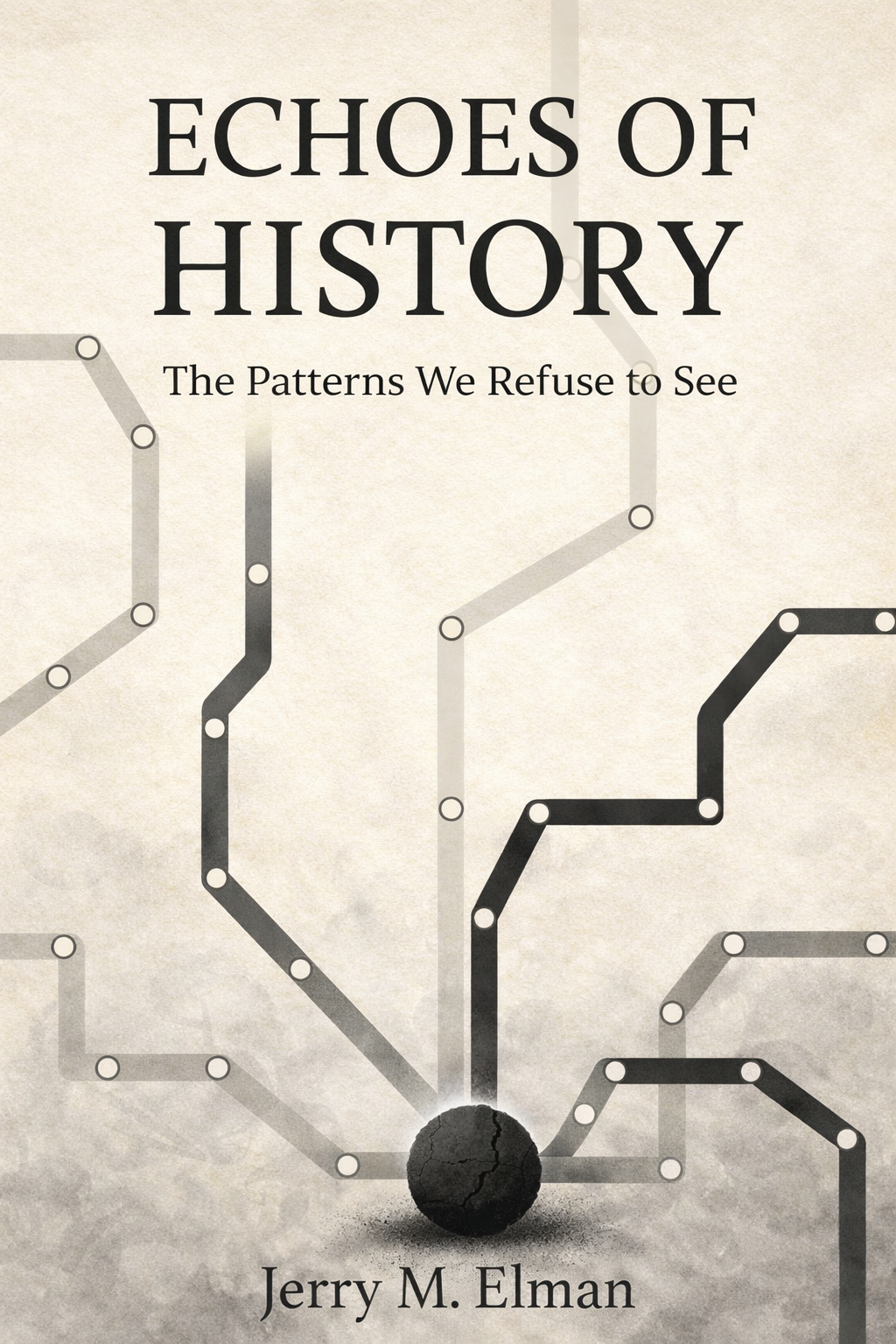
Echoes of History
The Patterns We Refuse to See
After telling my parents’ story, another question would not leave me alone: why do people so often recognize profound societal change only after it has already become history?
Echoes of History moves beyond particular events and looks at recurring patterns of human behavior—fear, blame, silence, division, exhaustion, economic pressure, the erosion of shared reality, and the gradual normalization of things that once would have felt unacceptable.
It is not an argument that the present is the past repeated. History does not return in identical events. The book asks us to recognize something more useful: the behaviors and pressures that can return in different times, different places and different forms.
The thread between them
The subject changed. The underlying concern did not.
01
Miracles Through Hell
What happened to my family—and what did their survival leave behind?
02
Echoes of History
What can history teach us about how people adapt to change while they are living through it?
03
The Destination We Are Choosing
Once we recognize what is happening to us, what do we choose to carry forward?
The past matters most when it helps us see the choices still in front of us.
Beyond the books
The writing leads into conversation.
Neither book was meant to end when the last page was turned. They are part of a larger effort to make history, inherited memory, and social change discussable in ordinary rooms among people who may not begin from the same place.
That is why Echoes of History continues through The Destination We Are Choosing—a guided community conversation centered not on winning an argument, but on recognizing what pressure and division may be changing in all of us.
The continuing question
What do we owe the history we inherit?
For me, remembering has never been the end of the responsibility.