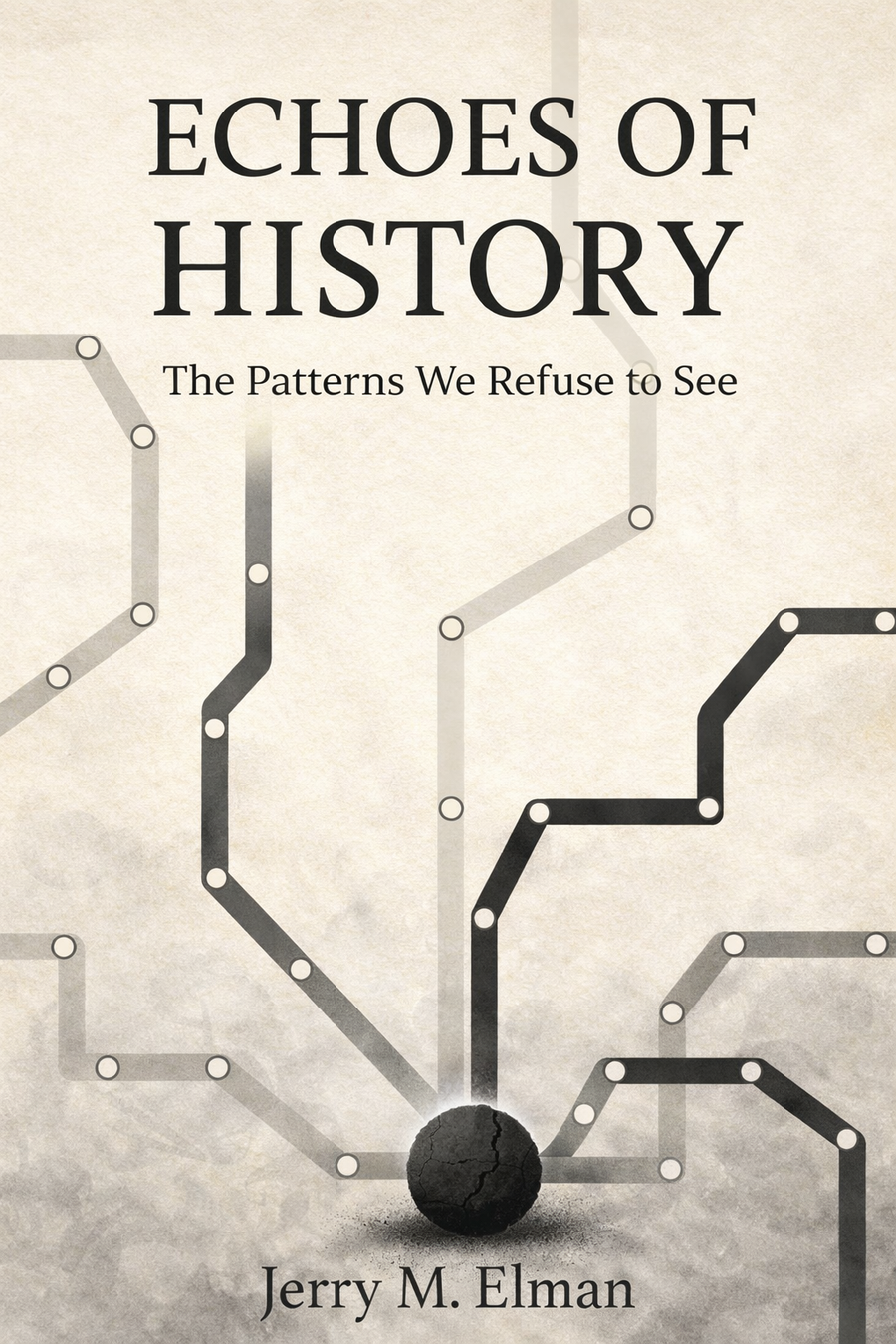
Echoes of History
The Patterns We Refuse to See
A book about patterns, change, and the destination we are choosing.
Most people believe they would recognize major societal change while it was happening. History suggests otherwise.
I did not write this book to tell people what to think. I wrote it because I kept returning to a simpler question: how much can change around us before we realize we have changed with it?
We work harder and feel less secure. We are surrounded by more information and understand one another less. We are angrier, more divided, and increasingly willing to accept things that once would have bothered us.
Why patterns matter
Change is often lived before it is understood.
The book looks at change from several directions at once: the pressures shaping ordinary life; weakening institutions and shared reality; fear, blame, silence, and indifference between people; and the small adjustments we make inside ourselves when something troubling becomes familiar.
I did not write it as a conventional history or a single political argument. History does not repeat itself in identical events. The same people, places, and circumstances do not return exactly as they were. But human beings repeat behaviors. Institutions repeat failures. Pressure changes what people will tolerate.
What have we gotten used to that should still bother us?
The question is not only what is changing around us. It is what is changing in us while we live through it.Five questions behind the book
- What has changed in me?
- What have I gotten used to that should still bother me?
- Who or what is shaping my thoughts, reactions, and behavior?
- Who benefits when I am angry, afraid, divided, distracted, or blaming someone else?
- What do I want to take back or strengthen?
From book to conversation
The book was never meant to end on the page.
The Destination We Are Choosing grew from the questions the book leaves with us. It moves those questions into a room where people can slow down, listen, and examine what pressure, fear, blame, division, and silence are doing to us.
The book provides the lens. The conversation creates the mirror.